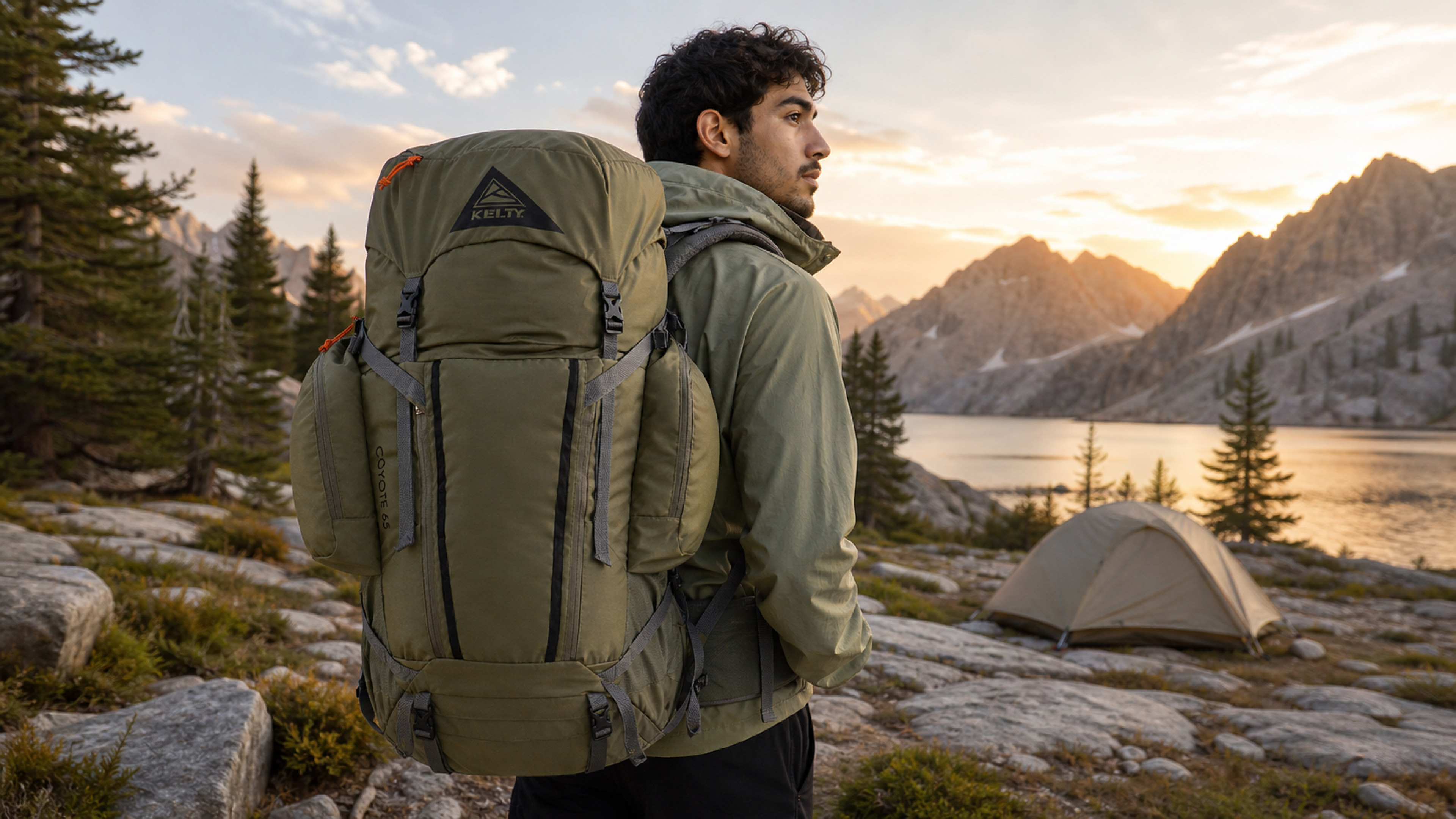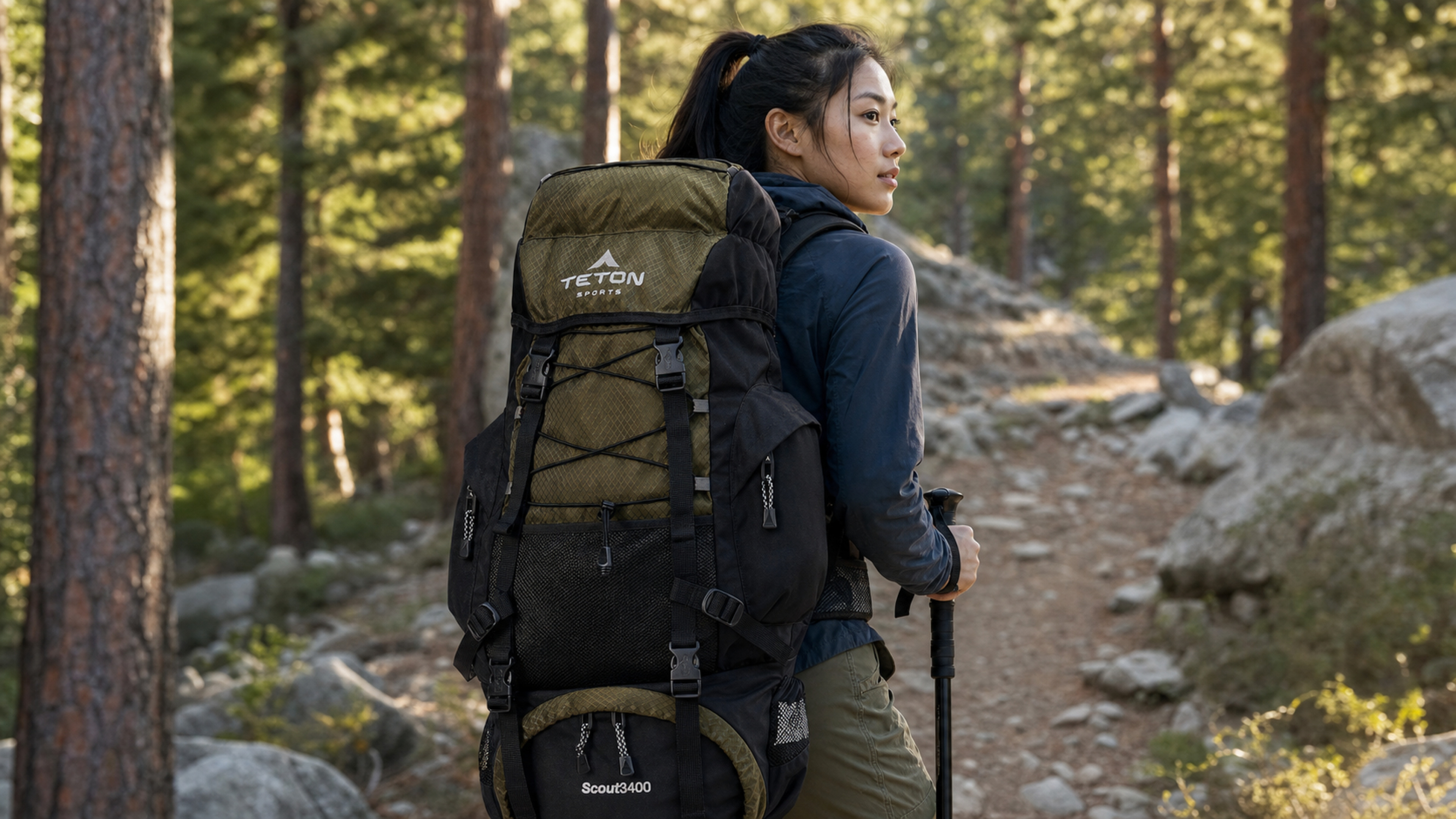
What does a first real backpacking pack actually need to have?
I ask this a lot, because I keep meeting people — teenagers heading out on their first trip, adults finally trying the thing they've meant to try for a decade — who are about to spend a lot of money on a pack for a hobby they haven't started yet. And that pressure puts people off entirely.
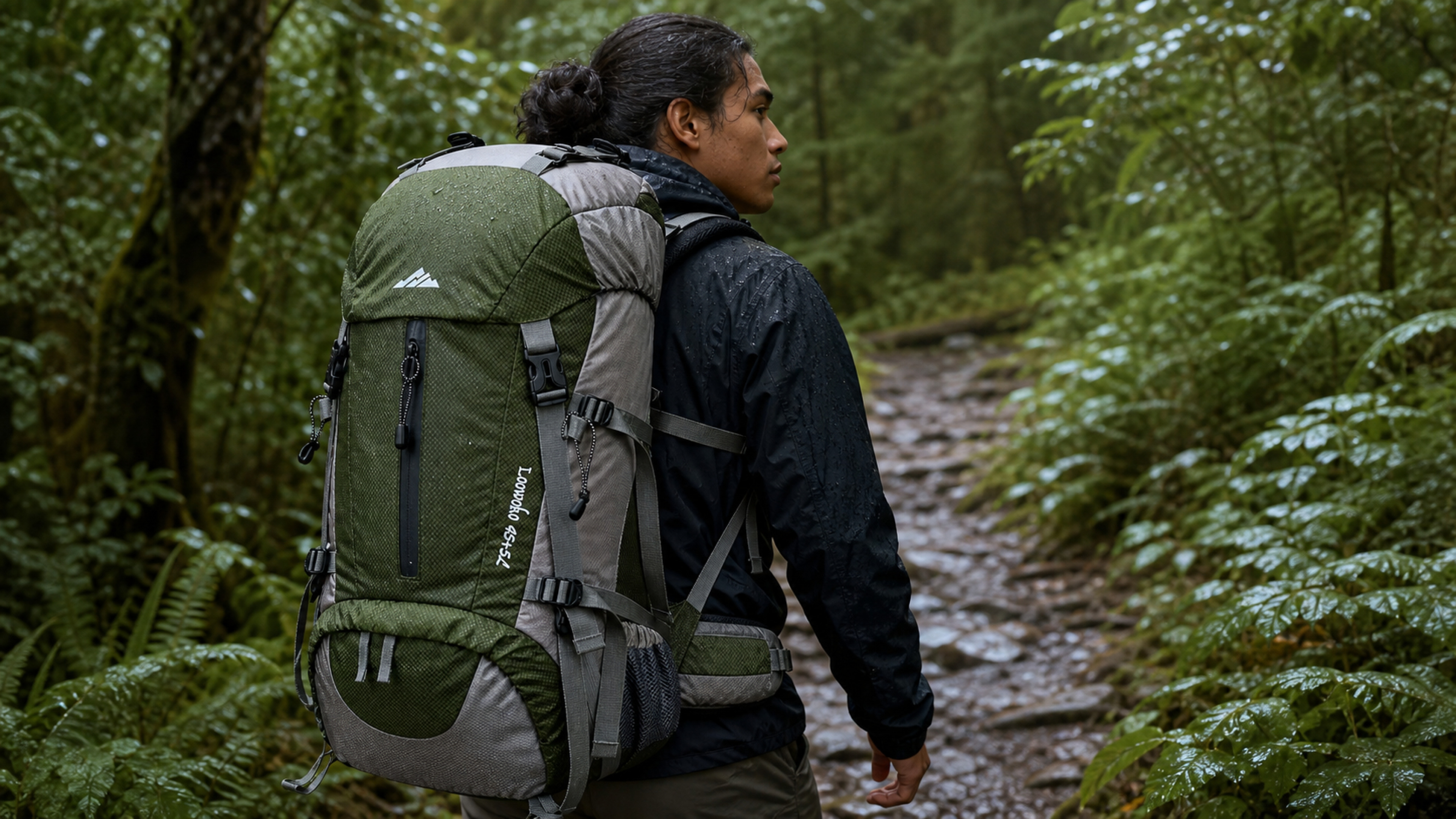
So here's my honest list of non-negotiables, and the Scout 55L hits all of them. An internal frame, because a frameless pack at this volume just becomes a sack of weight hanging off your shoulders. A padded hip belt, because your hips carry load and your shoulders can't. And an adjustable torso fit, because a pack sized wrong is uncomfortable no matter how good it is.
That last one deserves emphasis. Adjustable torso length is the feature people skip past, and it's the one that decides whether a trip is pleasant. Measure yourself, set the harness, walk around your house with it loaded before you go anywhere. Ten minutes of setup saves you a day of misery.
Capacity is 55L, which is genuinely multi-day. There's a dedicated sleeping-bag compartment at the base, which does two useful things at once: it keeps your bag clean and separate, and it naturally puts a light, bulky item low where it belongs. Multiple exterior pockets sort the small stuff, and compression straps pull a partly-full load in tight so it doesn't shift as you walk.
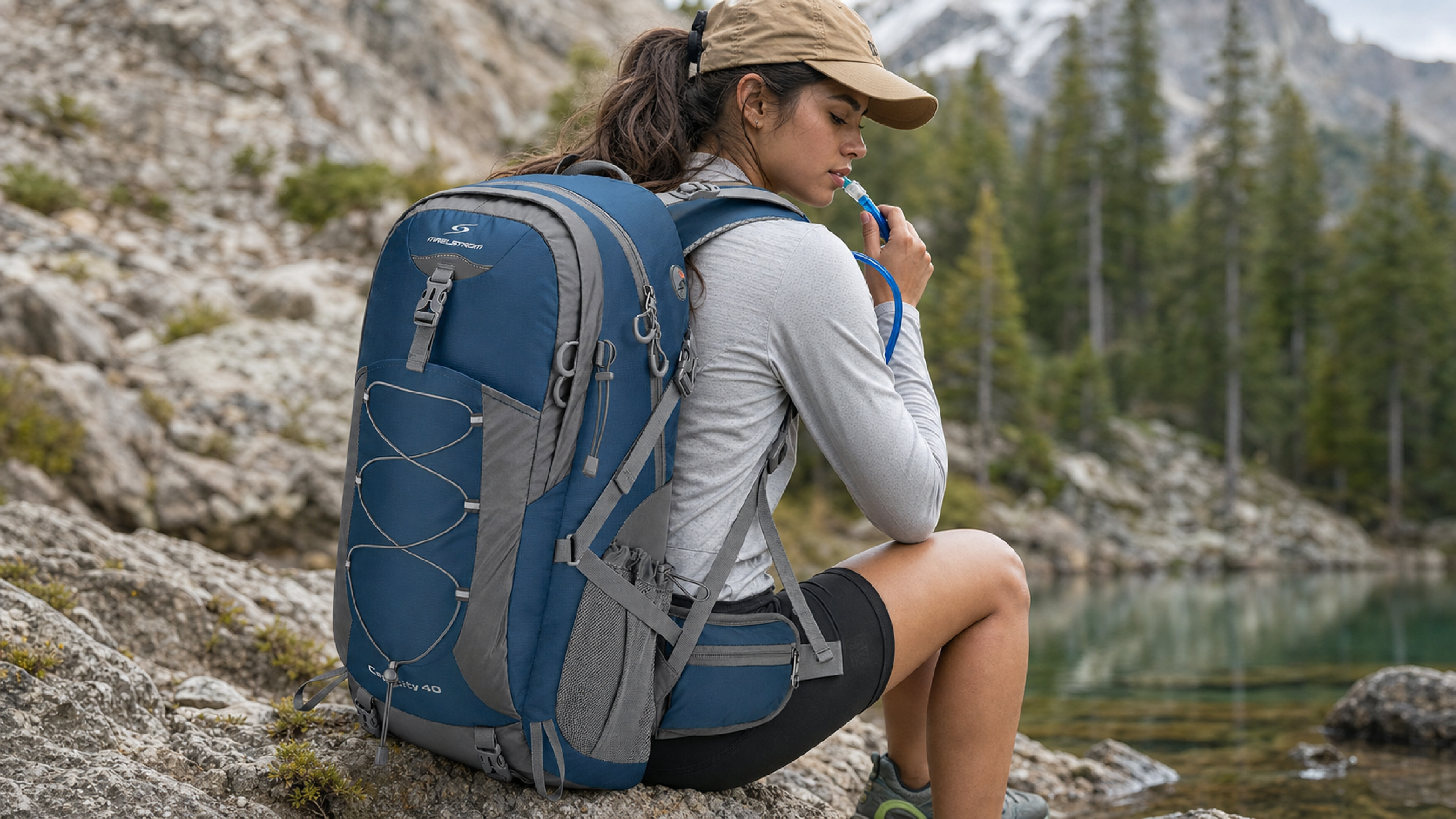
It's hydration compatible, and it comes with an integrated rain cover — which I always look for, because the rain cover you own and left at home is worth nothing. Attached beats separate every time.
The reason I recommend this one so often is the price. It's accessible in a way that lets you find out whether you love backpacking without a purchase you'd resent if you didn't. And if you do fall for it, this pack will still be doing honest work as your loaner for a friend years later. If there's a trip you've been putting off because the gear felt like too big a commitment — this removes that excuse entirely. Have a look.